
Negotiation
Dialogue to resolve differences and reach mutual agreement.

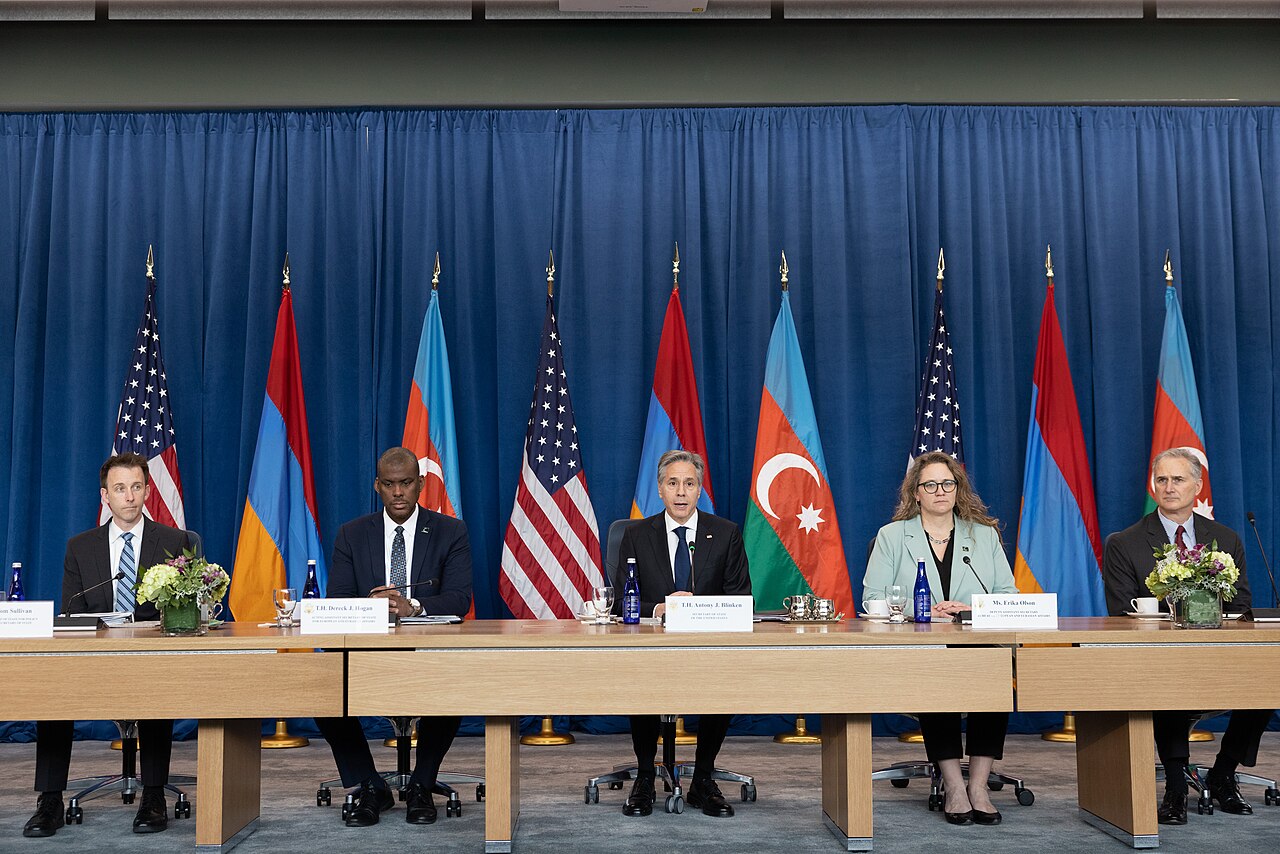
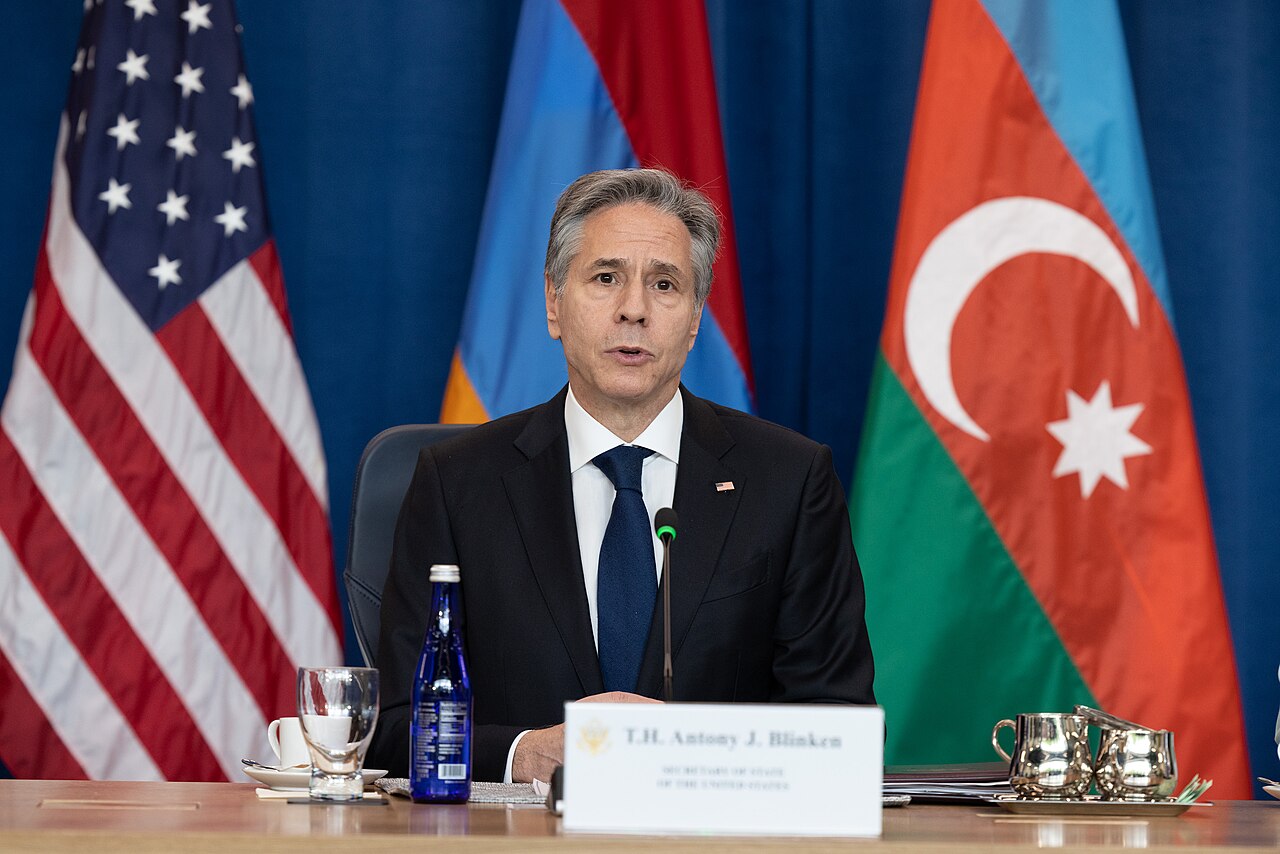
U.S. Department of State · Public domain
Negotiation is a dialogue between two or more parties to resolve points of difference, gain an advantage, or craft outcomes to satisfy various interests. It occurs daily, often without conscious recognition, and takes place in organizations, legal proceedings, and personal situations such as marriage, divorce, and parenting.
- field
- Communication, Conflict Resolution, Business
- known_for
- Dialogue to resolve differences and reach mutual agreement
- types
- Distributive, Integrative, Text-based, Integrated, Mediation
Lore & Background
The word 'negotiation' originated in the early 15th century from Old French negociacion, from Latin negotiatio, combining neg- 'no' and otium 'leisure,' meaning 'business, trade, traffic.' By the late 1570s, it had shifted to mean 'to communicate in search of mutual agreement.' Negotiation can take various forms, including conferences between United Nations members, meetings between combatants to end military conflict, business transactions, and conversations between parents about childcare. Mediation is a form where a third party helps conflicting parties negotiate, contrasted with arbitration where parties commit to accepting a third party's decision.
Reader's Guide
Negotiation is a fundamental process in human interaction, ranging from daily personal exchanges to high-stakes international diplomacy. The source article distinguishes two primary types: distributive negotiation, which operates under zero-sum conditions with a fixed pie of benefits, and integrative negotiation, which attempts to expand the pie through trade-offs and creative problem-solving. The success of a negotiation depends heavily on trust between parties and the ability to understand each other's needs. Professional negotiators include union negotiators, peace negotiators, hostage negotiators, diplomats, legislators, and arbitrators. Automated negotiation, conducted by algorithms or machines, requires correct modeling of participants and process. The principle that 'nothing is agreed until everything is agreed' is often used in complex negotiations like those in the World Trade Organization.
Did You Know?
- The word 'negotiation' originated from Latin neg- 'no' and otium 'leisure,' meaning 'business, trade, traffic.'
- Distributive negotiation is also known as win-lose game, compromise, or hard-bargaining negotiation.
- Integrative negotiation attempts to 'expand the pie' by compensating losses with gains from another item.
- Mediation involves a third party helping conflicting parties negotiate when they cannot do so alone.
Gallery

Frequently Asked Questions
Who is Negotiation?
In the Civil Law And Remedies canon, Negotiation is the structured conversation through which two or more parties settle disputes, secure favorable terms, or design outcomes that address multiple stakeholders' needs. It shows up in court-adjacent settings, corporate dealings, and everyday personal matters such as family arrangements.
What are Negotiation's powers/role?
Its core function is to guide conflicting parties toward a mutually acceptable agreement without a judge or arbitrator imposing a verdict. It operates as a voluntary, dialogue-driven mechanism for resolving differences and crafting either binding or non-binding outcomes.
How does Negotiation's story end?
The arc concludes when the parties either reach a settlement that satisfies their respective interests or walk away when no acceptable compromise can be found. In legal proceedings, a successful negotiation often replaces full litigation, saving time and cost for everyone involved.
Why is Negotiation important?
It is the primary tool in civil law for resolving disputes efficiently because it preserves party autonomy and allows tailored solutions a court could never order. Its constant presence in business, family law, and organizational settings makes it one of the most frequently exercised remedies in practice.
What types or forms does Negotiation take?
The canon recognizes several modes, including distributive (zero-sum) bargaining, integrative (value-creating) bargaining, text-based exchanges, integrated approaches, and mediation-facilitated sessions. Each form suits different conflict dynamics and stakeholder configurations.
More in Civil Law And Remedies 1-20
Spotted an error? Know more?
This is a living reference — every entry is fact-audited, and reader corrections feed straight into our audit queue. Suggest an edit · See this site's audit record